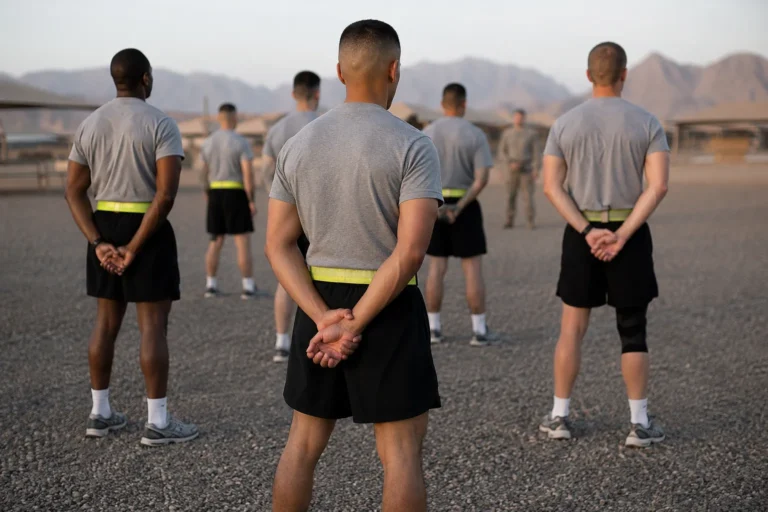
TEST DAY GUIDE
AFT Test Day: What Actually Happens
The five events in order, what your grader watches for, and how the day runs from the Preparation Drill to the finish line.
On AFT test day you run five events in one fixed order. Deadlift, hand-release push-up, sprint-drag-carry, plank, then the two-mile run. A grader scores you in your test lane and signs your scorecard.
Your first AFT test as a record test carries real weight. The score goes on DA Form 705-TEST and then into DTMS. From there it feeds promotion points and flag decisions.
This page walks the day in sequence, from the Preparation Drill to the finish line. Rules here come from army.mil/aft and ATP 7-22.01, Holistic Health and Fitness Testing.
All Five AFT Events in Order
The AFT events always run in the same sequence. You cannot pick an order. You cannot skip ahead to a stronger event.
Those five AFT events are the three-repetition maximum deadlift and the hand-release push-up arm extension. Then come the sprint-drag-carry, the plank and the two-mile run. Each event scores 0 to 100 points.
Order | Event | Equipment | What the grader records |
|---|---|---|---|
1 | Three-repetition maximum deadlift | 60-pound hex bar and plates | Heaviest weight lifted three times |
2 | Hand-release push-up | Level surface | Correct repetitions in two minutes |
3 | Sprint-drag-carry | 90-pound sled, two 40-pound kettlebells | Time for five 50-meter shuttles |
4 | Plank | Level surface | Time in a correct plank position |
5 | Two-mile run | Measured course | Finish time |
Event names and standards: army.mil/aft. Equipment weights: GoArmy fitness requirements.
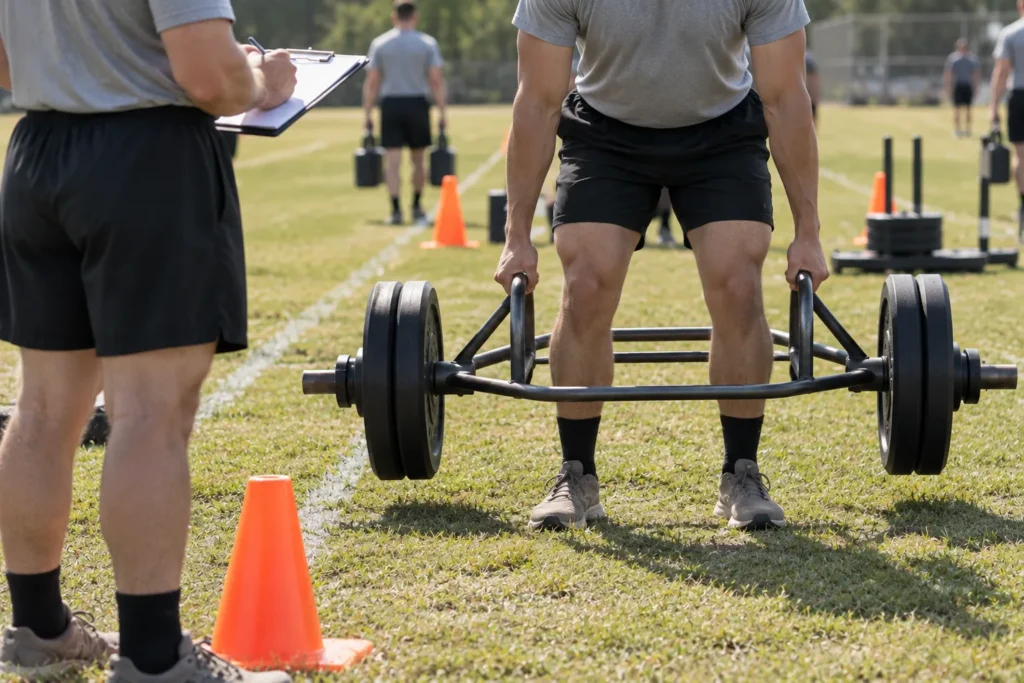
The deadlift gives you two attempts at most. Three continuous repetitions at the same weight make a valid set. Plates must touch the ground each time. Fail the set and you get one retest at a lower weight.
Push-ups run for two minutes. Chest, hips and thighs touch down together. Both arms then extend into the T position before your hands return under your shoulders.
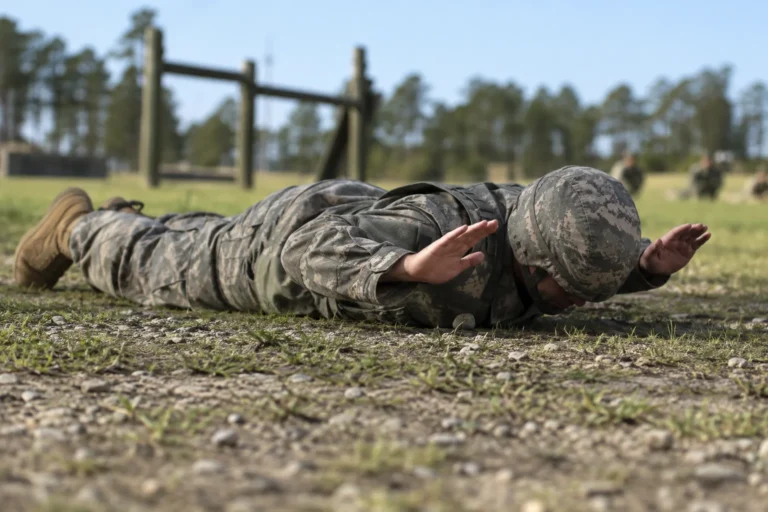
The sprint-drag-carry starts from the prone position. It covers 250 meters in five shuttles. Two graders watch it, one at the start line and one at the 25-meter turn line. Miss that turn line with hand and foot and you get called back. Our guide to cutting time on the shuttle event breaks down each leg.
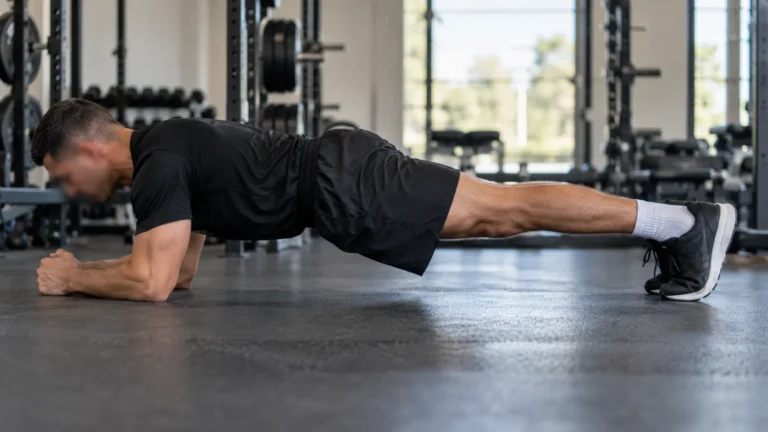
Your plank ends the moment your body leaves a straight line from head to heels. You get one verbal warning to fix your position. Shaking under maximum effort is allowed.
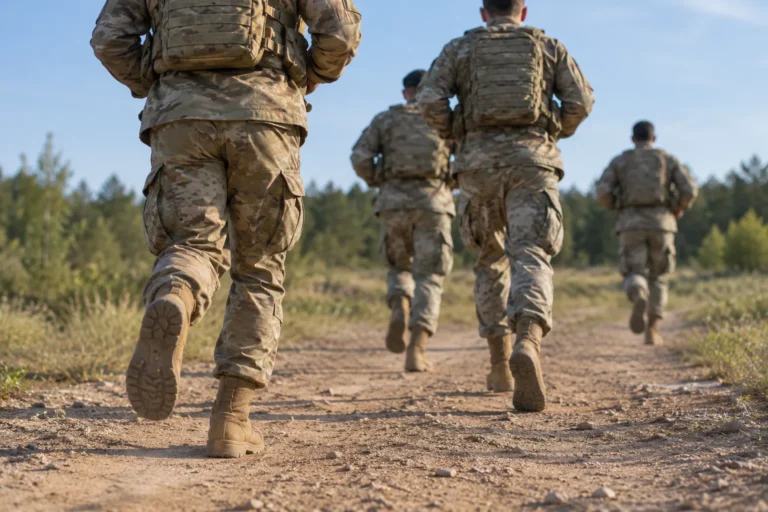
The run closes the day. Track, road or sidewalk all work. Unimproved terrain does not. Your start and finish line sits near the site used for the other four events.
Every event has its own failure points. The bar gets dropped instead of set down. Feet slide wide on the push-up. Hands cross on the lateral. A plank sags for two seconds too long. None of those cost points on their own, but each one costs you a repetition or a restart.
Two events end early if you break form badly enough. Your plank stops after one uncorrected warning. Your deadlift set stops if the weight moves out of control. The other three events run to their clock or distance no matter how rough they feel.
How many army fitness test events are there?
There are five army fitness test events. The Standing Power Throw was cut when the AFT replaced the ACFT on 1 June 2025. Army Directive 2025-06 dropped the count from six events to five. It also dropped the maximum score from 600 points to 500.
People still ask how many events are in the AFT because six-event pages remain online. A page showing a power throw or a 600-point total describes the retired test.
What are the five AFT events measuring?
Each event covers a different part of physical readiness. The deadlift measures lower body and grip strength. Push-ups measure upper body endurance. The shuttle event measures anaerobic power under load. Your plank measures core endurance. The run measures aerobic endurance.
That spread is why one weak event sinks a strong total. You need 60 points on every event. You also need 300 total for the general standard, or 350 for the combat standard. Check the point tables for your age bracket before you test.
Inside the Test Lane
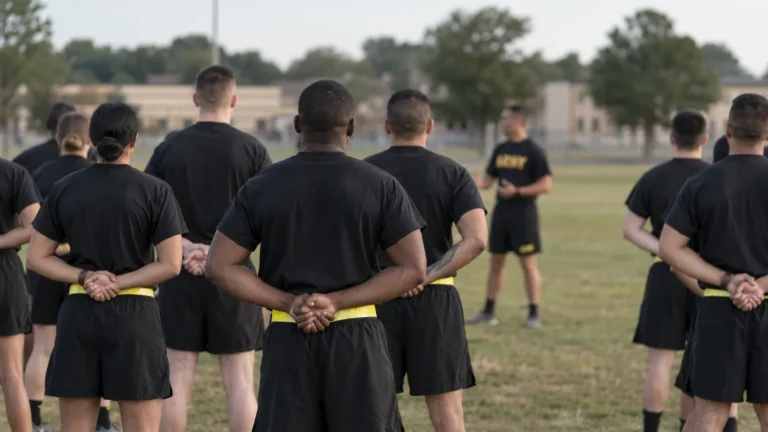
You test in a lane, and each lane has its own grader. Soldiers rotate through the lane in small groups. The next event starts once everyone in the formation has finished the current one.
Your day opens with the Preparation Drill, led by someone who is not testing. After the drill you get time to load your bar and warm up on it. Pick your deadlift weight before you arrive, not while the clock runs.
Graders read the standard and demonstrate the event before you start. Listen for the commands. GET SET and GO mean different things across events, and the plank adds a GET READY step first.
You must attempt all five events. Failing one does not end your test. You keep going through the remaining events in the same event order as everyone else.
Form gets corrected mid-event. A repetition that breaks alignment does not count toward your total. Ask your grader what they watch for before the event starts, not during it. Our grader standards walkthrough covers the callouts event by event.
Lane assignments can change between events. You might deadlift in one lane and plank in another. Your scorecard travels with you either way.
How Long Does the AFT Take?
Your test period starts with the first movement of the Preparation Drill. It ends when you cross the two-mile finish line. Everything between those two points belongs to the test.
The real answer to how long does the AFT take depends on group size. A squad on several lanes moves quickly. A platoon sharing two lanes waits through rotations, since nobody starts the next event early.
Block out a half day. Add travel to the site and the safety brief. Add any weigh-in your unit runs, plus the walk back to the motor pool.
Where you sit in the rotation matters too. An early group finishes the deadlift and then waits for the last lane. A late group tests on equipment that has been handled all morning. Neither position changes the standard, so warm up when your turn is close rather than at first formation.
How much rest between AFT events?
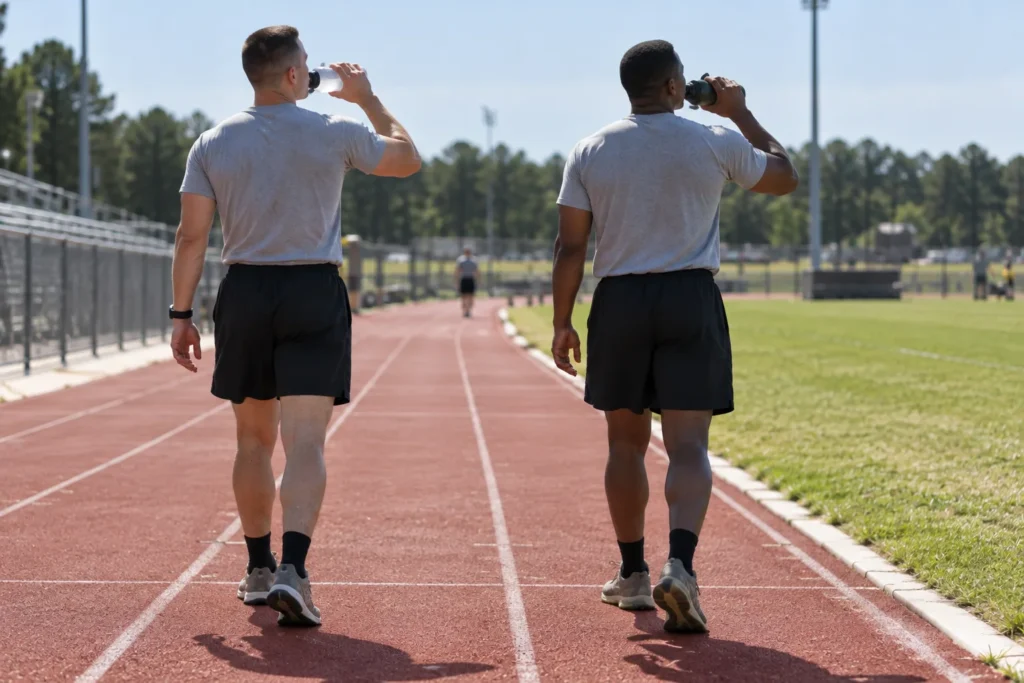
Rest comes from the rotation, not from a fixed allowance. You wait while other Soldiers in your lane take their turns. A recovery period sits between the plank and the two-mile run. Your grader announces its length in the brief.
Use that recovery well. Walk, sip water and bring your breathing down. Soldiers who sit flat on the ground until the whistle usually lose seconds on the run. Set your target splits first with the two-mile pace tool.
Scoring, DA Form 705-TEST and What Counts
Graders convert each raw result into points. The total goes on DA Form 705-TEST, with initials beside every event. You sign the card to confirm the numbers. Read it before you sign.
The correct designation for the scorecard is DA Form 705-TEST, APR 2022. Some sites list a 2026 AFT edition of the form instead. That edition has not been issued.
A score becomes official only when a certified grader enters it into DTMS. That single step separates a record test from a practice run.
Record test | Diagnostic test | |
|---|---|---|
Entered in DTMS | Yes | No |
Counts for promotion points | Yes | No |
Failure starts a retest clock | Yes | No |
Useful for pacing your training | Yes | Yes |
Test categories: Army Directive 2025-06 and ATP 7-22.01, Holistic Health and Fitness Testing.
More detail sits in our breakdown of the two kinds of test. Miss the standard on a record test and the clock starts.
Active duty and AGR Soldiers retest within 90 days. National Guard and Reserve Soldiers retest within 180 days. A failure also brings paperwork, and the flag process covers that part.
Run your raw numbers through the points tool the same day. Exact times fade fast.
Keep a photo of the signed card. Entries get mistyped, and a picture settles it quickly.
Your AFT Test Day Checklist
Build the list the night before. A short list beats a scramble at 0500.
What to bring | Why it matters |
|---|---|
APFU, plus any cold-weather layers your unit authorizes | Your commander sets the uniform for the test |
Running shoes you have already trained in | New shoes raise your blister risk on the run |
Water and a small snack | The recovery before the two-mile run is short |
Your goal deadlift weight and target splits, written down | You pick the weight before you arrive, not on the clock |
Your last scorecard | You arrive knowing the number to beat |
Profile paperwork | Needed if you test modified events |
Eat a light meal two to three hours out. Skip anything new on test morning. That includes new shoes and new pre-workout.
Sleep is the item most Soldiers skip. Two solid nights before the test beat one late night of last-minute training.
What Do You Wear for the AFT?
The standard answer to what to wear for the AFT is the APFU. Commanders set the uniform. ATP 7-22.01 makes the commander responsible for consistent uniform, equipment and scoring across the test.
Ask about gloves, chalk, belts and wraps before test day. Published AFT standards do not list supportive gear as authorized. Treat it as banned until your commander says otherwise.
AFT Test Day FAQ
Before Your Next AFT Test
Walk in with the sequence memorized and your numbers written down. Hand in a clean card, then check the DTMS entry a few days later. If a profile sends you to a different aerobic event, confirm those rules with your unit first.