RULES AND SCORING
Record vs Diagnostic AFT: What DTMS Army Entry Decides
A record test reaches your personnel file. A diagnostic does not. Here is exactly what separates them, and how to confirm your score landed in DTMS.
A record AFT counts and a diagnostic AFT does not. DTMS Army entry is the only thing that separates them. The events are identical. The scoring scales are identical. Only the record test reaches your personnel file.
A commander can run the Army Fitness Test any time. What turns one of those tests into an official result is a certified grader entering the score into DTMS. Nothing else does it. Not your scorecard. Not a calculator printout. Not a photo of your total on someone’s clipboard.
This page covers what each test is, who decides which one you took, what DTMS holds, and how to check that your score landed where it needs to land.
This page is an independent reference. Army Grader has no affiliation with the U.S. Army or the Department of Defense. Figures reflect policy as of August 2026.
What Is a Diagnostic AFT?
A diagnostic AFT is a practice test run to standard. The diagnostic AFT produces a real score on a real scorecard, but the result does not go into your record as an official test.
Units use diagnostic tests for a few plain reasons. Leaders want a readiness snapshot before a scheduled record test. New soldiers arrive and the first sergeant wants a baseline. Someone is coming off profile and needs to see where they stand.
Remedial programs lean on them heavily. Army Directive 2022-05 described the pattern during the ACFT era. Soldiers in remedial PT took a diagnostic every 30 days until they passed a record test. Units still run that cycle today under the AFT.
Nothing punitive attaches to a diagnostic result. You cannot be flagged for it. It generates no promotion points. It does not start a retest clock. A soldier who bombs a diagnostic has bad news and a training plan, not a personnel action.
That freedom is the point. A diagnostic AFT lets you find out what a bad plank or a slow two mile actually costs you before it costs you anything. Run the numbers yourself first and you will see what each raw performance is worth in points before you ever step on the field.
Graders should still run a diagnostic to standard. Sloppy grading produces a comfortable number that falls apart on test day. If your unit’s diagnostic looks nothing like a real lane setup, treat the score as soft. It helps to know exactly what a grader is watching on each event so you can tell a generous count from an honest one.
Who Decides If a Test Is Diagnostic?
The commander does, and the call has to come before the test. The long-standing rule in AR 350-1 is that commanders may test as often as they want, but they must specify beforehand when results are for record. An unannounced test that nobody designated as a record test is diagnostic by default.

What Is DTMS? Army Training Records Explained
DTMS stands for Digital Training Management System. Several fitness sites expand it as “Defense Training Management System.” That is wrong. Army training publications and army.mil both use Digital, and ATP 7-22.01 names it the same way when it assigns grader reporting duties.
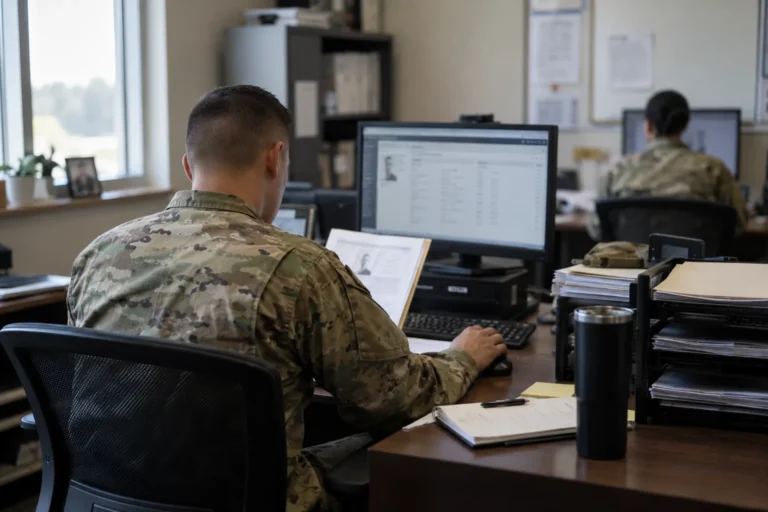
DTMS holds unit training data and each soldier’s Individual Training Record, or ITR. Fitness test results live there. So do weapons qualification results and other required training. When a personnel action asks whether you have a current passing test, DTMS is the source that answers.
Entry is manual. The Army published fact sheets showing operators using DTMS wizards, the unit dashboard, and a mass entry tab to load fitness scores for a whole roster. A second common claim on ranking pages says AFT scores enter DTMS automatically. They do not. A person sits down and types them in, usually a training NCO or a DTMS operator in your S3 shop.
That detail matters more than it sounds. Manual entry means a typo is possible. A score can go in late, go in against the wrong soldier, or not go in at all. Your DTMS Army record is only as good as the last person who touched it.
What Makes a Record AFT Official?
Three things have to line up. The commander designated the test as a record test beforehand. A certified grader scored each event to standard and signed the scorecard, DA Form 705, alongside you. Then that result reached DTMS. Miss any one of the three and you do not have an official record AFT.
What Is the Difference Between a Record and Diagnostic AFT?
Same test, different consequences. The table below lays out what actually changes.
Record AFT | Diagnostic AFT | |
|---|---|---|
Designated before the test | Yes, by the commander | No designation required |
Graded by a certified grader | Required | Should be, but no policy weight |
Entered into DTMS as official | Yes | No |
Counts for promotion points | Yes | No |
Can trigger a flag | Yes | No |
Starts a retest clock on failure | Yes | No |
Appears on evaluation reports | Yes, pass or fail plus points | No |
Source: Army Directive 2025-06 and Army Directive 2026-07.
The evaluation report line comes straight from Army Directive 2026-07. It requires reports to reflect both pass or fail and the actual points earned for the record AFT. A diagnostic score has no business on an NCOER or OER.
Promotion points follow the same split. Army Directive 2025-06 made the AFT the basis for all promotion actions effective 1 October 2025. Army guidance then set the DTMS deadlines. General standard scores had to be in DTMS from 1 October 2025, and combat standard scores from 1 January 2026. A score sitting only on paper earns nothing under AR 600-8-19.
One more change worth flagging. A high record score used to buy a body composition exemption at 465 points. Army Directive 2026-13, effective 7 July 2026, rescinded that exemption along with the tape test and the height and weight tables. Waist-to-height ratio under 0.550 is now the sole body composition standard, so you can work out your own ratio separately from your test score.
How Often Do You Take an AFT Test of Record?
It depends on your component. Army Directive 2025-06 sets two schedules for the AFT test of record.
Regular Army soldiers, Active Guard Reserve soldiers, and Reserve Component soldiers on active duty orders for more than 60 days must pass two record AFTs per calendar year. No fewer than four months can separate passing record tests.
Everyone else in the Reserve Components passes one record AFT per calendar year, with no fewer than eight months between passing record tests.
Combat specialties in the Reserve Components now alternate. Army Directive 2026-07 has them take a record AFT one calendar year and a record run at the seven-event field test the next. That assessment is pass or fail, done in ACUs and boots, and it does not replace the AFT.
Between those record tests, diagnostics are unlimited. Your commander can run one every month if the training calendar allows it.
What Happens If You Fail a Record AFT?
You retest inside a fixed window. Army Directive 2025-06 requires Regular Army, AGR, and Reserve Component soldiers on orders over 60 days to pass a record AFT within 90 days of a record failure. Other Reserve Component soldiers get 180 days.
Some pages still publish a 120 to 180 day window. That figure belongs to Army Directive 2022-05, the retired ACFT policy. It has not applied since the AFT took over on 1 June 2025. Using the old number can cost you a month of training you thought you had.
A failed record test also opens the door to a flag and remedial PT. The grace period is gone. Army Directive 2025-06 held adverse administrative action until 1 January 2026, and that date has passed for the active component.
Diagnostics carry none of this. Fail six diagnostics in a row and your record stays clean. The clock only starts when an AFT failure hits DTMS. If one event is dragging your total under, check which event is actually costing you the most points. If it is the two mile, set a realistic split before the retest rather than guessing on the start line.
Check Your DTMS Army Entry After Every Record Test
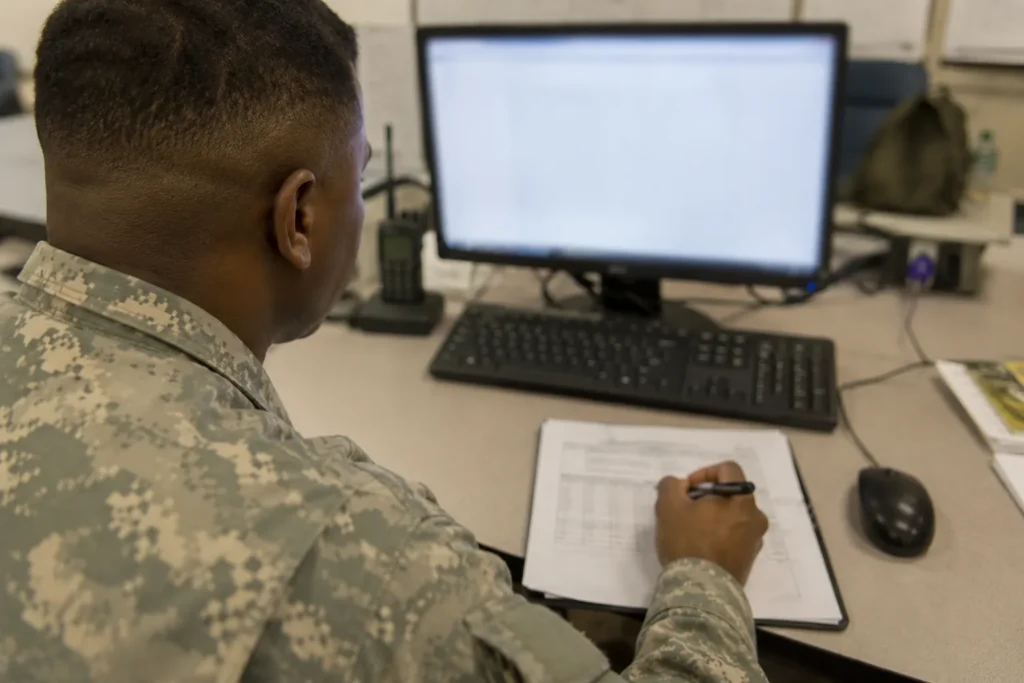
Do not assume the entry happened. Ask your training NCO to pull your ITR and read the score back to you. Do it within a couple of weeks of the test, while the scorecard is still findable.
Check four things. The date is right. All five event raw scores are right. The total matches your scorecard. The test is marked as a record test and not something else.
If you ran an approved substitute for the two mile, confirm it is recorded correctly. Alternate aerobic events are graded go or no-go and do not produce a 0 to 100 event score, which changes what your total should look like.
Then check IPPS-A separately. HQDA promotion guidance tells unit S1s to verify that training records, including the AFT score, show correctly in IPPS-A. Your Promotion Point Worksheet is built from that record. A correct DTMS Army entry with a wrong IPPS-A figure is an S1 problem, not an S3 problem, so take it to the right shop.
Keep your signed scorecard. It is the only proof you hold if the entry goes missing. A soldier with a signed DA Form 705 and a witness gets a correction. A soldier with a memory does not.
Frequently Asked Questions
What to Do Before Your Next Record Test
Find out which kind of test is on the training calendar, and ask before you show up. If it is a diagnostic, treat it as free information and push hard on your weakest event. If it is for record, walk through the grading standards for each event so no repetition gets waved off on a technicality. Soldiers lose more points to a bad hand release or a soft plank than to poor fitness.
After the test, close the loop. Get your signed scorecard, then confirm the DTMS Army entry shows the right total on the right date. A score that never reaches DTMS is a score you did not earn as far as the Army is concerned. Verify it early, while the paperwork still exists.