TEST HISTORY
APFT vs ACFT vs AFT: Every Change Explained
Two rebuilds in three years. Here is what the Army added, kept and cut, and which standard counts for record today.
The Army Fitness Test replaced the ACFT on 1 June 2025 under Army Directive 2025-06. The core ACFT vs AFT difference is simple. Five events replaced six. The maximum score dropped from 600 to 500 points.
Seeing the full picture takes one more step back. Two rebuilds happened, not one. The APFT gave way to the ACFT in 2022. Three years later the ACFT gave way to the AFT. An ACFT vs AFT comparison covers only the second half of that story.
This page walks the whole timeline. It names every event the Army added, kept and cut. It also tells you which standard governs your record score right now.
APFT vs ACFT: The First Rebuild
The APFT vs ACFT change rewrote the test from the ground up. Three events became six. A scorecard that had run for decades went into the archive.
What the APFT Measured
The Army Physical Fitness Test used three events. You did push-ups for two minutes. You did sit-ups for two minutes. Then you ran two miles.
Each event scored 0 to 100 points by age and sex. Sixty points per event was the floor. A passing total ran from 180 to 300 points. Scores went on DA Form 705, the Army Physical Fitness Test Scorecard. FM 7-22 held the standards.
Alternate aerobic events existed for soldiers on permanent profile. Those were graded go or no-go. No point value went on the scorecard for them. That rule carried forward and still applies today.
Scoring past 100 points earned nothing on your record. Each extra push-up counted one more point. Every six seconds cut from the run added one more. Those numbers stayed local. An official record score never topped 300.
High scorers earned recognition. A soldier who reached 270 points or better took home the Physical Fitness Badge. That required at least 90 points on every event. No equivalent badge carried over to the ACFT or the AFT.
Criticism of the APFT built for years. The three events measured muscular endurance and aerobic capacity well enough. They did not measure lifting, dragging or loaded movement. Soldiers do all three. Injury rates and deployment demands pushed the Army toward a broader test.
What the ACFT Changed
The Army Combat Fitness Test carried six events. Those were the three-repetition maximum deadlift, the standing power throw, the hand-release push-up, the sprint-drag-carry, a core event and the two-mile run.
Sit-ups did not survive the move. The leg tuck took over as the core event. It lost that job before the test ever counted for record.
Six events scored 0 to 100 each put the maximum at 600 points. The 60-point floor per event still applied. That set the minimum passing total at 360.
The ACFT did not arrive overnight. The Army field-tested it for several years before it counted for anything. Versions shifted during that stretch. Scoring models changed, the core event changed, and the name stayed the same throughout.
Army Directive 2022-05 fixed the dates. Secretary of the Army Christine Wormuth signed it on 23 March 2022. Implementation opened on 1 April 2022. Record testing started 1 October 2022 for the Regular Army and Army Reserve AGR soldiers. The rest of the Reserve Component started 1 April 2023.
That same directive settled two long arguments. It made the plank the only core event. It dropped the leg tuck outright. Gender-neutral scoring gave way to scales normed by age and sex. The 2.5-mile walk joined the alternate aerobic list.
Deadlines then ran in phases. Regular Army and AGR soldiers had to log a first record ACFT before 1 April 2023. Army National Guard and Army Reserve soldiers had until 1 April 2024. A failure on or after the record date brought a flag.
Only one event crossed from the APFT into the ACFT unchanged. The two-mile run survived. Push-ups came across in modified form as the hand-release push-up. Sit-ups did not come across at all.
Training against a six-event card wastes effort now. Run your raw numbers through the current scoring tool instead. The event list has changed twice since that card was printed.
When Did the AFT Replace the ACFT?
The AFT replaced the ACFT on 1 June 2025. Army Directive 2025-06 states the change plainly. It bars the ACFT after 31 May 2025. One directive, one date. Any six-event test taken on or after 1 June 2025 is not a test of record.
Correcting a Date You Will See Online
Some pages claim the ACFT started on 1 June 2026. No Army directive supports that figure. The ACFT opened implementation on 1 April 2022 under Army Directive 2022-05. It ended on 31 May 2025 under Army Directive 2025-06. Nothing about the ACFT began in 2026.
Other pages still present the ACFT as the current test. That has been wrong since 1 June 2025. A site handing you a six-event scorecard is scoring a retired test. So is any page showing a 600-point maximum. Check figures against the published scales by age bracket before you trust them.
How the Changeover Was Phased
Testing started immediately. Consequences did not. Soldiers had until 1 January 2026 to meet the new requirements without adverse action. Active Guard Reserve soldiers fell under that same date. So did soldiers mobilized on orders longer than 60 days.
Combat specialties followed a separate clock. The higher combat standard took effect 1 January 2026 for active-duty soldiers in those roles. National Guard and Reserve soldiers in the same specialties had until 1 June 2026.
Promotion rules switched on a third date. A record ACFT taken before 31 May 2025 still counted for semi-centralized promotions through 30 September 2025. From 1 October 2025 forward, the AFT drives every promotion action.
Difference Between ACFT and AFT Scoring
The ACFT vs AFT scoring gap is one event wide. Removing the standing power throw took the ceiling from 600 to 500 points. That single cut explains most of the difference between ACFT and AFT scoring.
Everything else about the point scale held. Each of the five events scores 0 to 100. You need 60 points on every event. The general standard is 300 points total. That figure is 60 multiplied by five. No separate gate sits above the arithmetic.
Combat specialties carry a higher bar at 350 points. The same 60-point floor applies to each event. That combat standard is sex-neutral and age-normed. It uses the male scoring column. No third table exists.
Army Directive 2026-07, dated 17 April 2026, brought the combat list to 24 specialties. It added 12D Army Diver, 89D Explosive Ordnance Disposal Specialist and 89E Explosive Ordnance Disposal Officer. Coverage that still says 21 was written before that directive.
Age brackets stayed detailed. The AFT scoring scales use ten of them. The brackets are 17-21, 22-26, 27-31 and 32-36. They continue through 37-41, 42-46, 47-51 and 52-56. The last two are 57-61 and Over 62. You can see the ten brackets in full rather than guessing where yours starts.
Each event now carries more of your total. On the ACFT, one event was worth about 17 percent of the maximum. On the AFT, one event is worth a flat 20 percent. That shift matters in an ACFT vs AFT comparison. A weak event costs you more than it used to. You also have one fewer strong event to cover it.
Alternate aerobic events did not join the point scale. A soldier on permanent profile can swap the two-mile run for another approved event. Options include the 2.5-mile walk, the bike, the swim and the row. Those results record as go or no-go. They add no points to your total.
One more rule decides whether any of this counts. Only a certified grader entering a result into the Digital Training Management System produces an official score. A number you worked out at home is a training figure.
APFT vs AFT: The Full Distance Traveled
Reading APFT vs AFT side by side shows how far the standard moved. One test measured general fitness in three events. The other measures five. It also splits the pass line by role.
Feature | APFT | ACFT | AFT |
|---|---|---|---|
Number of events | 3 | 6 | 5 |
Maximum score | 300 | 600 | 500 |
Minimum per event | 60 points | 60 points | 60 points |
Minimum passing total | 180 | 360 | 300 general, 350 combat |
Core event | Sit-ups | Leg tuck, then plank | Plank |
Aerobic event | Two-mile run | Two-mile run | Two-mile run |
Scoring basis | Age and sex | Age and sex from 2022 | Age and sex, sex-neutral combat column |
Governing document | FM 7-22, AR 350-1 | Army Directive 2022-05 | Army Directive 2025-06 |
Status | Retired | Retired 31 May 2025 | Current |
Sources: Army Directive 2022-05, Army Directive 2025-06 and the AFT Scoring Scales effective 1 June 2025.
An APFT vs AFT score does not convert. The two tests share no common raw numbers. A 280 on the old scorecard tells you nothing about your standing today. Feed current reps and times into a tool built on the 2025 tables for a real number.
Why Was the ACFT Changed?
Evidence drove both rebuilds. Congress ordered an independent review of the ACFT. The RAND Corporation carried it out. RAND found women and Reserve Component soldiers failing at noticeably higher rates. It also found the leg tuck leaning on upper body strength rather than core strength.
The 2022 revision answered those findings directly. Scoring moved to age and sex normed scales. Plank replaced leg tuck. A 2.5-mile walk joined the alternate aerobic options.
Design assumptions took the hardest hit. The Army had sold the ACFT as age-neutral and gender-neutral. Standards were meant to tie to your MOS. RAND questioned the data behind that link. Army Directive 2022-05 dropped the MOS-based approach.
Three years later the Army cut deeper. Officials said the standing power throw was not promoting fitness and readiness as well as they wanted. They cited raised overuse injury risk. They also said it rewarded technique over real power output.
Combat roles moved the opposite direction in 2025. Army Directive 2025-06 built a second, higher bar for designated combat specialties. It made that bar sex-neutral. The ACFT vs AFT change lowered the ceiling and raised the floor at once. Which one you feel depends on your job.
What the Army Removed: Sit-Ups, Leg Tuck and Standing Power Throw
Three events left the Army fitness test inside seven years. Each one left for its own reason.
Sit-ups went out with the APFT in 2022. Repeated spinal flexion under time pressure fell out of favor. The Army swapped it for a static hold.
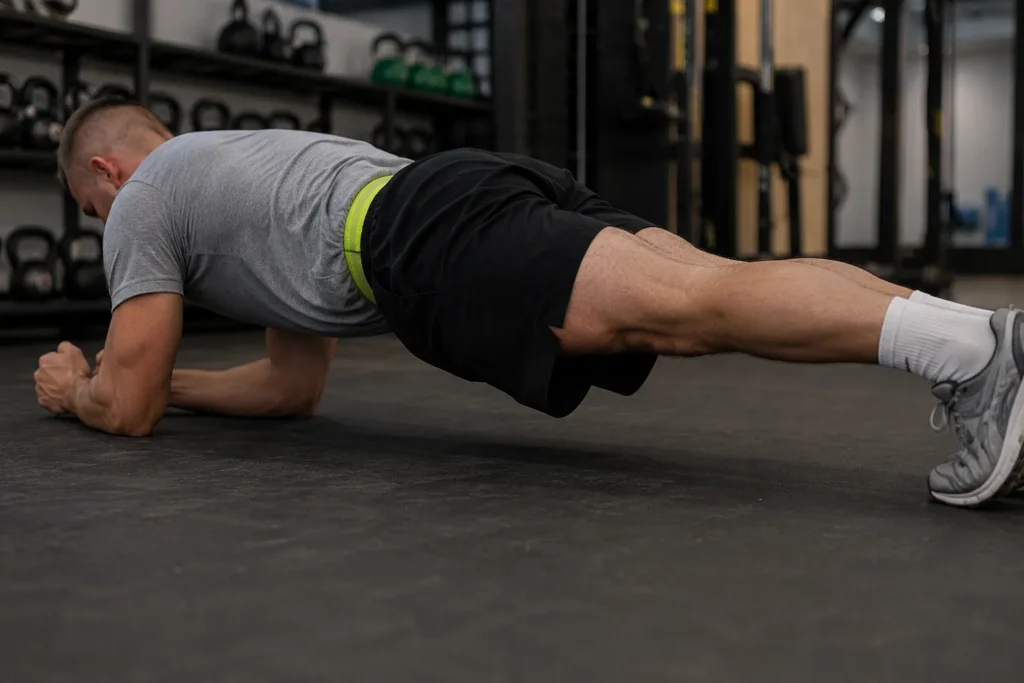
Leg tuck lasted the shortest time of the three. It never counted on a record ACFT. The RAND finding on upper body strength ended it in March 2022. Record testing did not begin until that October.
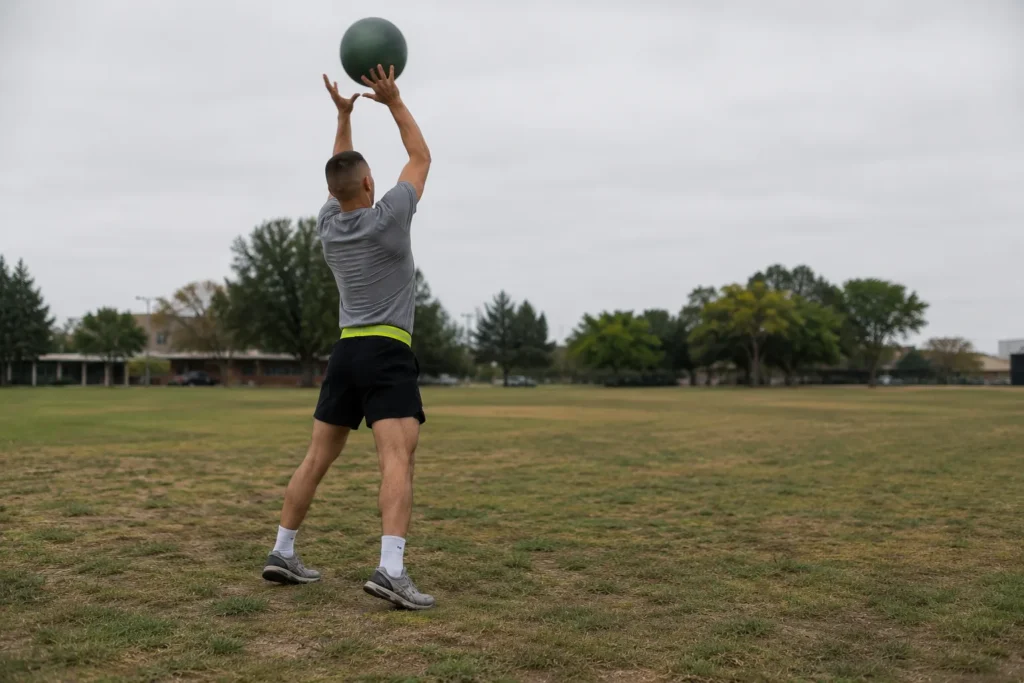
Standing power throw is the single event that separates ACFT vs AFT. It required a 10-pound medicine ball thrown backward over the head. Distance decided the score. Army Directive 2025-06 retired it on 1 June 2025.
Event | Left with | Directive | Reason given |
|---|---|---|---|
Sit-ups | The APFT | Army Directive 2022-05 | Replaced by a static core hold |
Leg tuck | The 2022 ACFT revision | Army Directive 2022-05 | Measured upper body strength, not core |
Standing power throw | The ACFT | Army Directive 2025-06 | Injury risk and technique over power |
Only one of the three was ever graded for record across a full cycle. That was the standing power throw. Sit-ups and the leg tuck both left before their replacements counted.
Does an Old ACFT Score Still Count?
No. The promotion window for old ACFT scores closed on 30 September 2025. Your six-event total now sits in your record as history. Nothing converts it into an AFT score. The two tests do not share a raw scale. You need a fresh AFT graded and entered into DTMS.
Army Fitness Test Changes Beyond the Scorecard
Army fitness test changes did not stop at the point total. Three other rules moved. Each one affects how your record reads.
Retest windows shortened. You retest within 90 days on active duty and in the AGR. Reserve Component soldiers retest within 180 days. The 120 to 180 day figure that circulates online belongs to Army Directive 2022-05. That directive governed the retired ACFT.
Body composition changed completely. Army Directive 2026-13 took effect on 7 July 2026. It rescinded the tape test, the height and weight tables and the 465-point body fat exemption. A waist-to-height ratio under 0.550 is now the sole body composition standard. The threshold is less than 0.550, not equal to it.
The Combat Field Test arrived as a separate requirement. It runs seven events in 30 minutes or less. Grading is pass or fail. Soldiers take it in ACUs and boots. It does not replace the AFT. Those in the 24 combat specialties take both.
Alternate aerobic events kept their old treatment under the new army fitness test. They are graded go or no-go. They are not scored on the 0 to 100 scale. They cannot lift your total.
Some things held steady across all three tests. The two-mile run never left. Sixty points has been the per-event floor since the APFT. Age and sex have shaped the general scoring tables the whole way through. A certified grader has always been the one who makes a score official.

Frequently Asked Questions
Where to Go From Here
The ACFT vs AFT question has one clean answer. Five events, 500 points, 300 to pass. Combat specialties need 350. Anything printed against six events or 600 points is out of date.
Pull your last three training results. Score them against the current standard. Then check the minimum figures for your age bracket. You will see exactly how many reps or seconds sit between you and the next point.
Army Grader is an independent reference site. It is not affiliated with the U.S. Army or the Department of Defense.