COMBAT FIELD TEST
CFT vs AFT: Do You Take Both?
CFT vs AFT is not an either-or question. You take both. Soldiers in the 24 designated combat specialties pass two record tests a year. One Army Fitness Test. One Combat Field Test.
Army Directive 2026-07, signed 17 April 2026, puts it in a single line. The CFT is not a substitute for the AFT.
One thing does change. Your annual AFT count drops from two to one. Most CFT vs AFT explainers still miss that part.
AFT vs CFT: What Each Test Measures
AFT vs CFT is a difference of design. The AFT scores how fit you are on a 500-point scale. The CFT checks whether you finish a combat task sequence before the clock runs out. AFT vs CFT comes down to that split.
The AFT runs five events under Army Directive 2025-06. Each event scores 0 to 100 points, for a 500-point maximum. Scoring uses ten age brackets, from 17-21 up through Over 62. You need 60 points minimum on every single event. The general standard is 300 total. The combat standard is 350 total, and it is sex-neutral and age-normed.
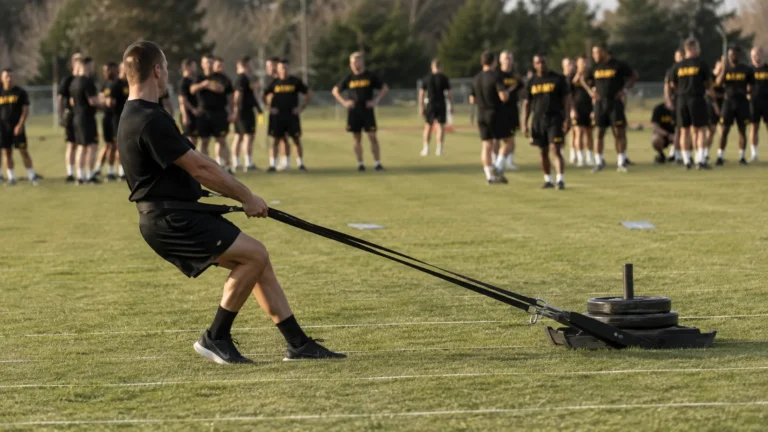
Seven events make up the CFT, run in one continuous sequence. No rest between events. There are no points at all, only a pass or a fail. Army Directive 2026-07 paragraph 4a(2) set the test as pass or fail. The directive handed the time standard to the Deputy Chief of Staff, G-3/5/7. HQDA EXORD 103-26 published that standard: 30 minutes or less.
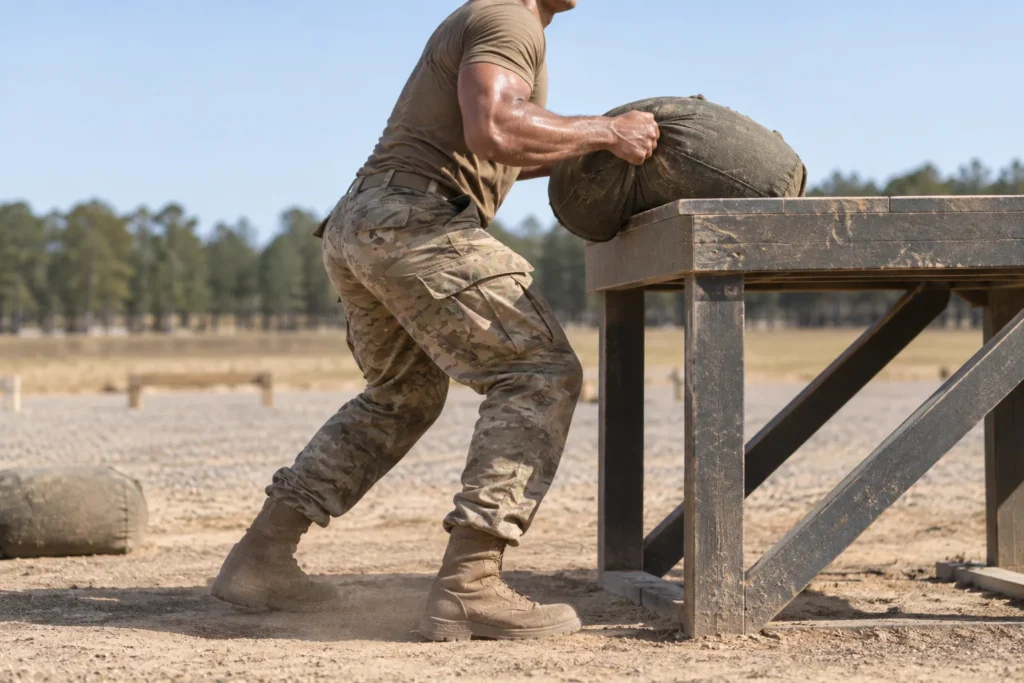
Total time decides the result. No individual event carries its own clock under paragraph 4a(2). Cumulative time across all seven events is the only measure. A slow sandbag lift can still be recovered on the closing run. One unfinished event, though, ends everything on the spot.
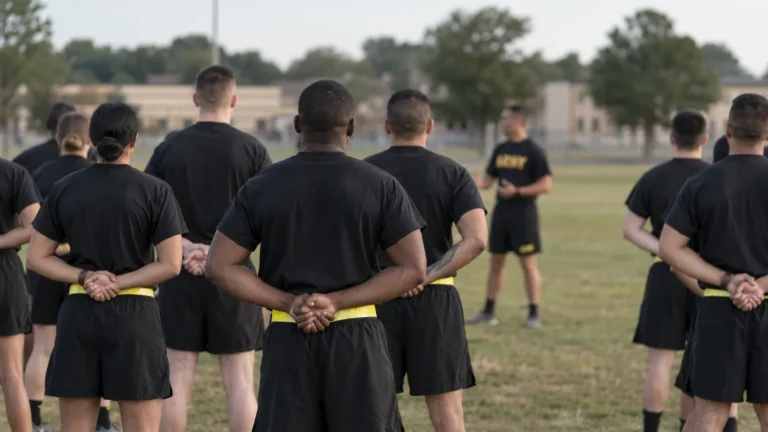
Your uniform is the Army Combat Uniform, top and bottom. Add a brown T-shirt and combat boots, with no cover. One standard applies to everyone taking it, regardless of age or sex.
Unit calendars write it as the Army CFT. You will also see CFT Army in search results and unit email traffic. Both names mean the Combat Field Test.
Item | AFT | CFT |
|---|---|---|
Authority | Army Directive 2025-06 | Army Directive 2026-07 |
Events | Five | Seven, run continuously |
Result | 0 to 100 per event, 500 maximum | Pass or fail, no points |
Passing | 60 per event; 300 general, 350 combat | All seven events in 30 minutes or less |
Age and sex | Ten age brackets; combat standard sex-neutral and age-normed | One standard for everyone |
Uniform | Standard PT uniform | ACU, combat boots, brown T-shirt, no cover |
Who takes it | Every Soldier | 24 designated combat specialties |
Frequency | Annual for combat specialty Soldiers | Annual |
Source: Army Directive 2025-06, 17 April 2025, and Army Directive 2026-07, 17 April 2026.
Both CFT runs bracket the test, one at the start and one at the finish. Read the seven events in order and the grading rule for each before building training around them.
Who Has to Take the CFT?
Only Soldiers in the 24 combat specialties listed in enclosure 2 of Army Directive 2026-07. Every other Soldier takes the AFT alone. Your MOS or AOC decides this, not your rank, your unit or your assignment. If your code is not on that list, the CFT does not apply to you.
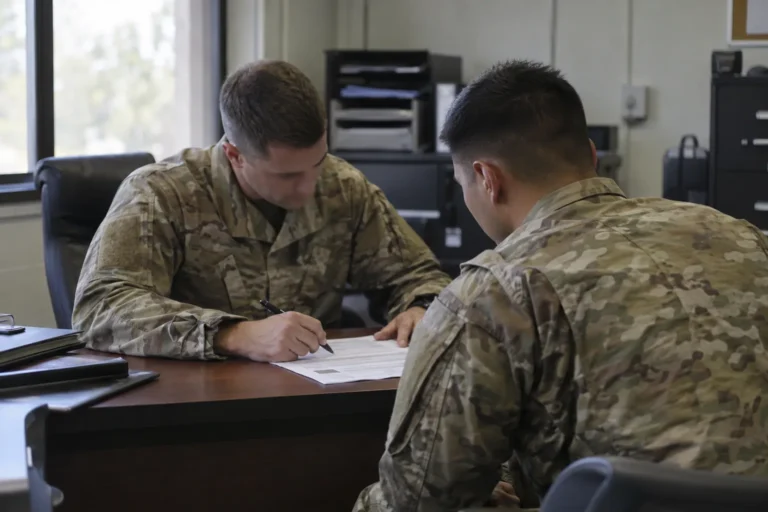
Profiles change eligibility rather than excusing it. A Soldier with an AFT-limiting permanent profile must take all AFT events without an alternate event. Only then is that Soldier eligible for the CFT. HQDA EXORD 103-26 paragraph 3.D.5.B sets that rule. Soldiers who cannot meet it are evaluated for reclassification out of the specialty.
Waiver authority rests with the general court-martial convening authority. It can also rest with the first general officer in your chain. Those waivers get reviewed every year. A Soldier holding one stays on the annual two-AFT requirement instead.
Temporary profiles work differently. Soldiers with temporary profiles follow their profile and the AFT guidance in Field Manual 7-22. That includes pregnancy and postpartum profiles. They take a CFT once the profile clears. Paragraph 4a(8) allows no test or event modifications for Soldiers on profiles.
Which MOS Take the Combat Field Test?
Branch | MOS and AOC codes |
|---|---|
Infantry | 11A, 11B, 11C, 11Z |
Engineers | 12A, 12B, 12D |
Field Artillery | 13A, 13F |
Special Forces | 18A, 180A, 18B, 18C, 18D, 18E, 18F, 18Z |
Armor | 19A, 19C, 19D, 19K, 19Z |
Explosive Ordnance Disposal | 89D, 89E |
Source: Army Directive 2026-07, enclosure 2.
Three of those are new. Army Directive 2026-07 paragraph 4b(2) added three codes. They are 12D Army Diver, 89D Explosive Ordnance Disposal Specialist and 89E Explosive Ordnance Disposal Officer. That moved the list from 21 codes to 24. Several references still show the old count of 21, so check the enclosure rather than a summary page.
Soldiers in those three codes now owe the AFT combat standard too. AR 350-1 paragraph C-5 carries that standard. Check it against the ten age brackets and raw score conversions.
How Often Do You Take the CFT?
Once per year. The rule covers Regular Army and Active Guard Reserve Soldiers. It also covers Reserve Component Soldiers on active-duty orders for 365 days or more. That group takes one record CFT and one record AFT annually. For them the CFT is a standing annual requirement, not a one-time event.
Everyone else in the Reserve Component works on alternating years. You take one record fitness test per calendar year. A record AFT one year, then a record CFT the next calendar year, and back again.
Phase timing matters right now. The implementation period ran 12 months from publication of HQDA EXORD 103-26 on 22 April 2026. Every Soldier in a designated combat specialty had to complete a diagnostic CFT within six months. Scorecards upload into ATIS. No administrative action followed a failed diagnostic during that phase. The CFT may be taken for record starting 17 April 2027.
Evaluations pick this up as well. Both AFT and CFT results appear on all evaluations, along with any approved waiver. That applies to evaluations with a thru date 18 months or more after publication.
How Long Between the AFT and the CFT?
Four months for Regular Army, AGR and Reserve Component Soldiers on active-duty orders for 365 days or more. Eight months for every other Reserve Component Soldier. Army Directive 2026-07 paragraph 4a(6) sets both figures. HQDA EXORD 103-26 repeats them at paragraphs 3.D.3 and 3.D.4.
Direction does not matter. The four-month gap runs between passing record tests either way round. Your AFT can come first, or your CFT can. Paragraph 4a(6) is explicit on this. No prerequisite exists to take or pass the AFT before or after the CFT.

The movement drill splits 50 meters into a high crawl and a 3 to 5 second rush.
One exception sits inside the eight-month gap. A Reserve Component Soldier may take an additional record AFT within that window when promotion or schooling requires it. CFT vs AFT scheduling then sits with your commander, inside those minimums.
The Second AFT Is Gone for Most Combat Soldiers
This is the figure worth checking. A lot of circulating guidance still says combat specialty Soldiers take two record AFTs a year. Those versions then add a CFT on top. The correct count is one record AFT and one record CFT.
Army Directive 2026-07 paragraph 4a(1) replaced that second AFT with the CFT. It applies to Regular Army, AGR, and Reserve Component Soldiers on 365-day orders. The directive is controlling where its provisions conflict with another regulation. It names AR 350-1 and Army Directive 2025-06 directly.
Paragraph 4a(7)(c) is where the two-AFT requirement survives. It holds for Soldiers with an approved permanent profile waiver. Those Soldiers are not eligible to take the CFT, so they stay on two AFTs each year.
Both results follow you onto evaluations. That is where how a record AFT score feeds your promotion total starts to matter.
One sourcing note while you are checking figures. The 30-minute standard often gets credited to Army Directive 2026-07 itself. That directive left the time standard to the Deputy Chief of Staff, G-3/5/7. HQDA EXORD 103-26 paragraph 3.B.1 is where the figure was actually published.
Failing the AFT or the CFT
A failed record CFT brings a flag and enrollment in reconditioning training. You retest within 90 days. Reserve Component Soldiers who are not AGR and not on 365-day orders get 180 days instead. A failure on either test runs its own track. CFT vs AFT consequences do not merge into one action.
Two consecutive CFT failures carry more weight. Enlisted Soldiers face reclassification, then involuntary separation under AR 635-200 chapter 13 if they refuse or cannot reclassify. Officers face involuntary branch transfer, or elimination under AR 600-8-24 paragraph 4-2(a).
Not testing carries its own penalty. Soldiers who fail to take a record CFT within 12 months of full implementation get flagged. A temporary profile is the only thing that stops that clock.
An unfinished event ends the whole test. Army Directive 2026-07 paragraph 4a(4) terminates the Soldier and records a failure. Pacing is the real problem, so study how the continuous clock is run before your diagnostic. Know what a fitness flag does to your record before test day, not after.
Frequently Asked Questions
What to Do Next
Check your MOS or AOC against enclosure 2 of Army Directive 2026-07 first. Then find the date of your last passing record test. Count forward four months, or eight if you drill. CFT vs AFT planning is mostly calendar work once you know your group.
Before your next record date, score your five events against the 350 combat standard. Then confirm you clear the waist-to-height standard under Army Directive 2026-13.