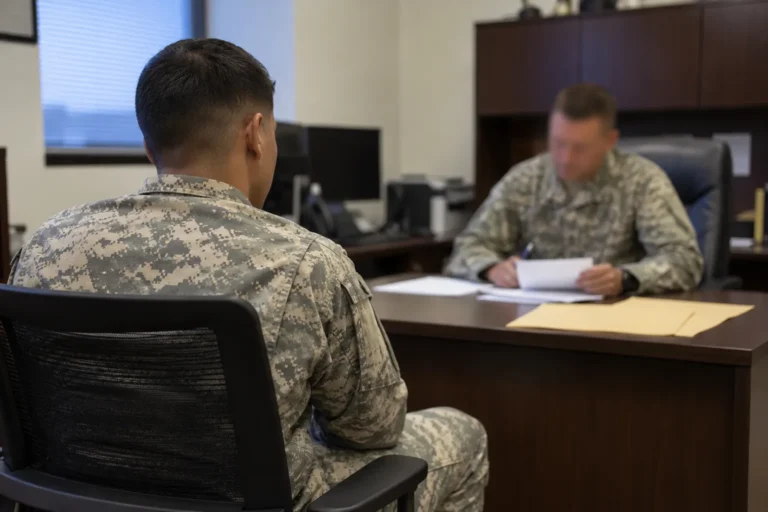
COMBAT FIELD TEST
CFT Training for Pacing: How to Split 30 Minutes
Treat the Combat Field Test as one 30-minute budget, not seven separate events. Smart CFT training sets your own event splits, because the Army publishes none. It also protects time for the second mile.
The test runs on one cumulative clock, from the first step to the final finish line. Every second spent in one event is a second you cannot spend in another. That turns pacing into a math problem you solve before test day.
armygrader.com is an independent reference site. It is not affiliated with the U.S. Army or the Department of Defense.
How Your CFT Time Is Measured
Your CFT time is a single number: total elapsed time across all seven events. The Army grades that CFT time as pass or fail, with no points and no age table.
The U.S. Army announcement of 22 April 2026 describes seven events run continuously and scored on total time. Army Directive 2026-07, signed 17 April 2026, made the test pass or fail. HQDA EXORD 103-26 paragraph 3.B.1 published the 30-minute standard.
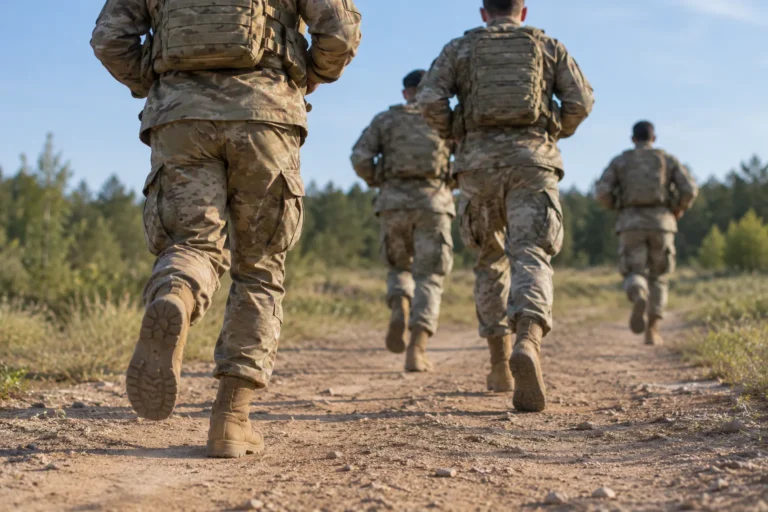
You test in the Army Combat Uniform, combat boots and a brown T-shirt, with no cover. ACU and boots slow both runs compared with running shoes, so train in them. Before you plan anything, check whether the CFT applies to your MOS.
The events run in this fixed order:
Order | Event | Standard |
|---|---|---|
1 | 1-mile run | Opening run in boots |
2 | Dead-stop push-ups | 30 repetitions |
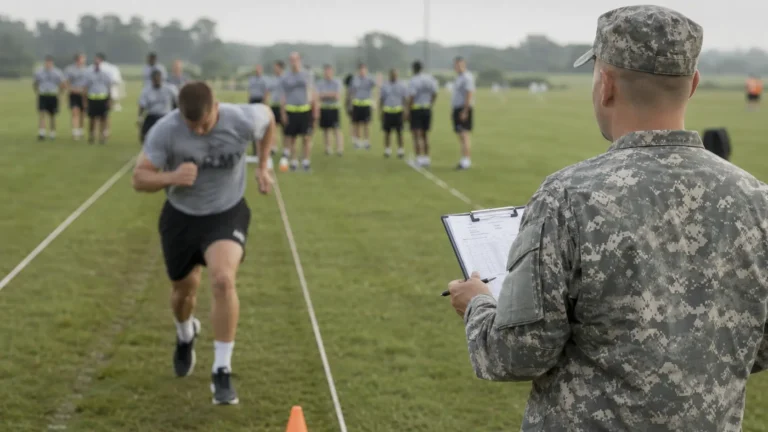
3 | Sprint | 100 meters |
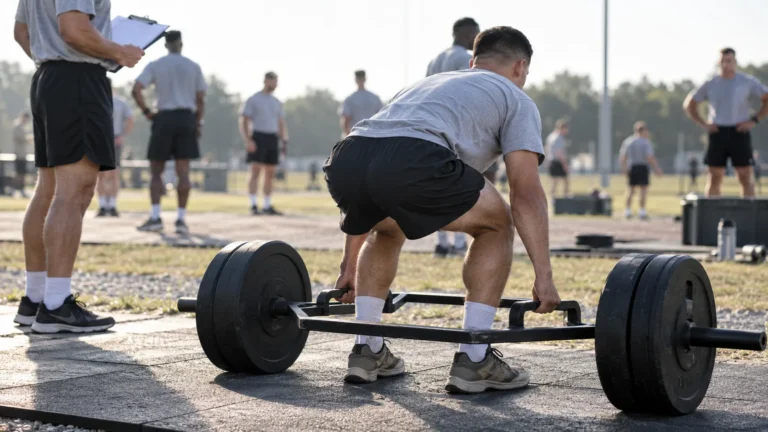
4 | Sandbag lifts | 16 lifts of a 40-pound sandbag onto a 65-inch platform |
5 | Water can carry | Two 40-pound cans, 50 meters |
6 | Movement drill | 25-meter high crawl, then 25-meter 3 to 5 second rush |
7 | 1-mile run | The second mile, to the finish |
Source: U.S. Army announcement, 22 April 2026; Army Directive 2026-07.
Soldiers who ask what is the passing time for the CFT get one answer. Finish all seven events in 30 minutes or less. The 30-minute standard covers every Soldier in the 24 combat specialties, regardless of age or sex.
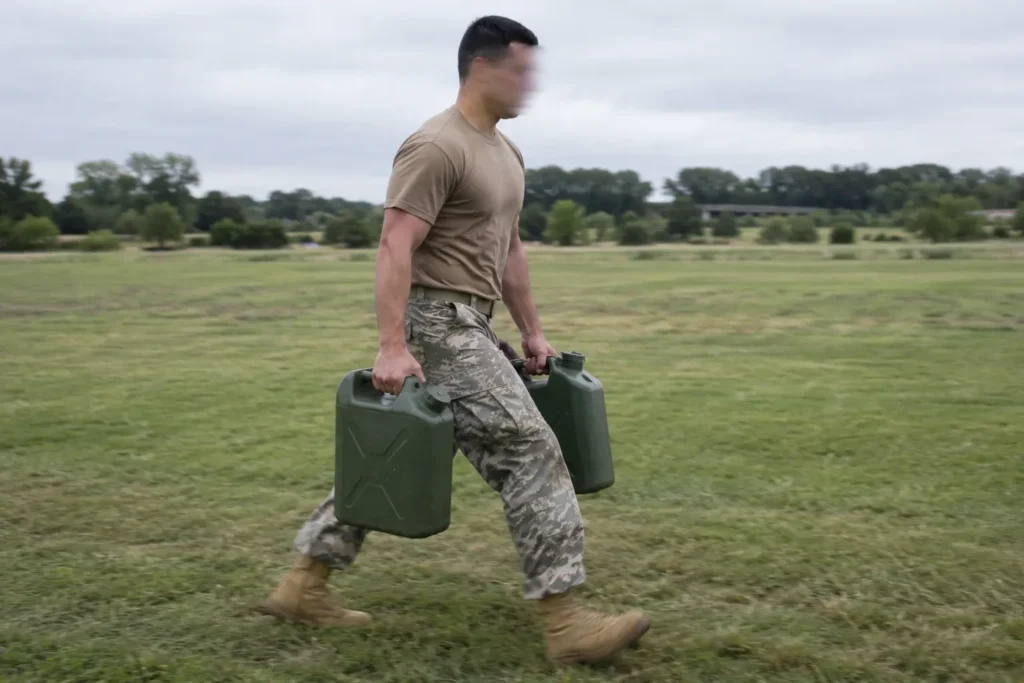
How long do you have for the CFT?
You have 30 minutes to finish all seven events, counted on one clock. The clock starts with the first mile. It stops when you cross the line at the end of the second mile. No single event has its own limit. A 30:00 passes and a 30:01 fails.
How Do I Pace the CFT?
Work backward from 30:00. Set a safety buffer, then subtract your two run times. What remains is your budget for the five middle events and every transition between them. Practice until your real splits fit inside that budget.
Everything between the runs draws from one pool of time. Push-ups, the sprint, sandbag lifts, the water can carry and the movement drill all share it. So do the walks between stations.
A CFT Pacing Strategy That Starts From the Finish
This CFT pacing strategy uses your own practice numbers, not Army figures. The table shows the method with example inputs only. Swap in the times from your last full rehearsal.
Step | Example input | Time left |
|---|---|---|
Start with the standard | 30:00 | 30:00 |
Keep a safety buffer | 1:30 | 28:30 |
First mile in ACU and boots | 9:00 | 19:30 |
Second mile, planned slower | 10:00 | 9:30 |
Budget for five middle events and transitions | 9:30 |
Example inputs are illustrations, not Army standards or averages. Arithmetic: 30:00 minus 1:30, minus 9:00, minus 10:00, leaves 9:30.
Plan the second mile slower than the first. It comes after the carries and the crawl, when your legs and grip are spent. Use the pace calculator to turn a target mile time into lap splits, then allow for boots.
Your first mile sets up everything after it. Here is how the two common approaches tend to play out:
Factor | Fast first mile | Controlled first mile |
|---|---|---|
Push-ups | Start with a racing heart rate | Start with breathing under control |
Middle events | Grip and breathing fade early | Budget holds through the carry |
Second mile | Pace drops hardest here | Room to hold pace or finish faster |
Buffer | Often gone before the crawl | Still there at the last mile |
Once you have a plan, plan your splits and run the clock across all seven events. Then test it on the ground.
Where Do Most Soldiers Lose Time?
The Army has not published event-level CFT results, so nobody can name one event with real data. The build of the test points to the second mile. It comes last, after every lift, carry and crawl, and you cannot bank time there.
Transitions are the quiet leak. Walking from the push-up spot to the sprint line still runs the cumulative clock. Rehearse the walks as hard as the events.
Failed reps cost you as well. Every event must be finished before you move on. Reps that do not count on the dead-stop push-ups add time, and an unfinished event ends the test.
How to Train for the Combat Field Test
Good CFT training rehearses the sequence, not just the parts. Put runs in ACU and boots into your week. Pair a hard mile with push-ups right after it. Add sandbag lifts and loaded carries on the days you do not run.
Once a month, run a full or partial rehearsal on a measured course. Log your combat field test splits at each station, including transitions. That log is the only honest pacing data you will have.
Compare each rehearsal to your budget. If the middle events run long, train them. If the second mile runs long, build run volume in boots. Read how the CFT and the AFT fit into one training year. That keeps the two tests from competing for the same weeks.
Frequently Asked Questions
What to Do Next
Run one timed rehearsal this month in ACU and boots. Write down every split, then build your budget backward from the finish. Let that budget drive your CFT training until test day. Before your next record AFT, score your five events against the 350 combat standard.