EVENT TRAINING
How to Improve AFT Score: Which Event to Train First
Which event to train first, how the AFT scoring curve works, and where your next points cost the least.
Train the event where your next point costs the least work. To improve AFT score totals quickly, score every event, find the cheapest next point, and train that event first. For most Soldiers, that means any event sitting under 60.
The reason is the scoring curve. Each of the five events turns pounds, reps or seconds into 0 to 100 points. Those points are not spread evenly. Some stretches of the table pay well, and others charge a lot for very little.
This post shows you how to read that curve and spend training hours where they pay. Every figure comes from the AFT Scoring Scales, approved 15 May 2025 and effective 1 June 2025.
What Is the Max AFT Score?
The max AFT score is 500 points. Each of the five events tops out at 100, so a max AFT score means 100 in all five. Army Directive 2025-06 made the AFT the test of record on 1 June 2025. It replaced the six-event ACFT.
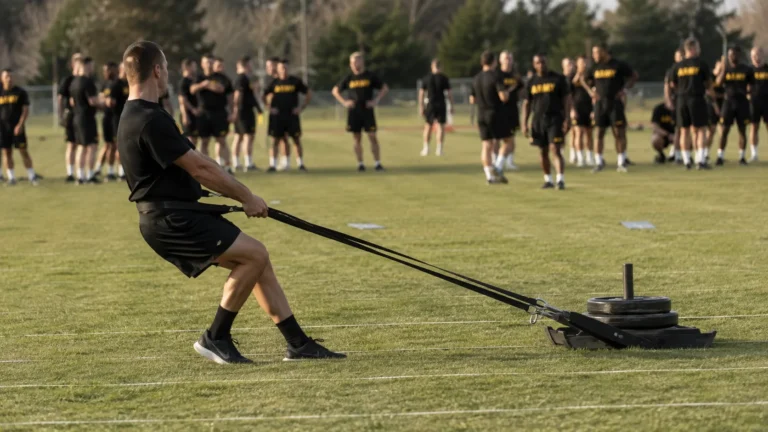
Five events remain now that the Standing Power Throw is retired. They are the 3-Repetition Maximum Deadlift (MDL) and Hand-Release Push-Up (HRP). The Sprint-Drag-Carry (SDC), Plank (PLK) and 2-Mile Run (2MR) round out the test.
You need at least 60 points in every event. Five events at 60 adds up to 300, so the general standard is plain arithmetic. Soldiers in the 24 combat MOSs need 350 total under Army Directive 2026-07. That combat standard is sex-neutral and age-normed. It uses the M|C column, the same column males use on the general standard.
How the Scoring Curve Shapes Your Training
The scoring curve is the link between raw performance and points. Its shape decides how many marginal points you earn from one more rep or ten more pounds. That return changes depending on where you sit in the table.
Here is what 10 points costs in two events. Both columns are M|C, ages 22 to 26, straight from the AFT Scoring Scales.
Points climb | Deadlift cost (MDL) | Push-up cost (HRP) |
|---|---|---|
50 to 60 | +20 lb (130 to 150) | +5 reps (9 to 14) |
60 to 70 | +40 lb (150 to 190) | +12 reps (14 to 26) |
91 to 100 (MDL), 90 to 100 (HRP) | +50 lb (300 to 350) | +13 reps (48 to 61) |
Source: AFT Scoring Scales, M|C column, ages 22 to 26. Approved 15 May 2025, effective 1 June 2025.
Look at the bottom of each table first. Below 60, points come cheap in both events. Above 60, the deadlift pays about 2 points per 10 pounds. At the top, the last 9 deadlift points cost 50 more pounds.
Push-ups behave differently. Each 10-point band above 60 costs a similar number of reps. The top band costs only one or two reps more than the middle bands.
Your bracket will not match this example. The scales use ten age brackets, from 17-21 through Over 62. Pull up the full event tables for your age bracket before you plan anything.
How to Max the AFT
Learning how to max the AFT is a separate problem from passing it. Near 100, points can get expensive, as the deadlift shows. Save maxing for later. First get every event comfortably above 60 and your total above your standard. Then work the event with the shortest raw distance to 100.
Which AFT Event Is Easiest to Improve?
The easiest event to improve is the one where you sit lowest on the curve. If any event scores under 60, start there. Those points are the cheapest on every table. A score under 60 in any single event also fails the whole test, no matter your total.
Asking which AFT event is easiest to improve for everyone misses the point. Your numbers decide it, not the event name. A strong lifter with a slow run has a different easy event. A fast runner who cannot pull 200 pounds has another.
Start with the point gap. That is the distance between your current points in an event and your target. Write all five gaps down. Then check the point values for each event to see what raw work closes each gap.
Which Event Gives the Most Points per Hour of Training?
No single event wins for everyone. Points per hour depend on your training economy, meaning how fast your body responds to work on that event. Newer lifters often add deadlift weight quickly. Soldiers with a weak aerobic base usually need more weeks to cut run time. Track your own rate of gain for three to four weeks.
Count hours, not sessions. Divide the points you gained in each event by the hours you spent on it. That number shows where your next hour belongs.
Find Your Cheapest Next Point
1. Run a diagnostic test. Do a full practice AFT under test conditions. Record raw results for all five events.
2. Score each event. Enter those results into our free scoring tool. It shows your points and the raw work needed to reach the next band in each event.
3. Rank by cost. The smallest raw cost for a next band goes first.
4. Retest in four weeks. Re-score and re-rank.

This ranking is the real answer to how to add 50 points to AFT score totals. You buy the cheap points first and leave the expensive ones for last.
Most AFT tips say to train all five events equally. Ranking by cost puts your hours where the table pays.
Treat a practice score as a guide only. An official score exists only when a certified grader enters your result into DTMS.
Setting a Good AFT Score Target
A good AFT score clears your standard with margin for a bad test day. For general Soldiers, that means beating 300 with every event at 60 or higher. For the 24 combat MOSs, the floor is 350.
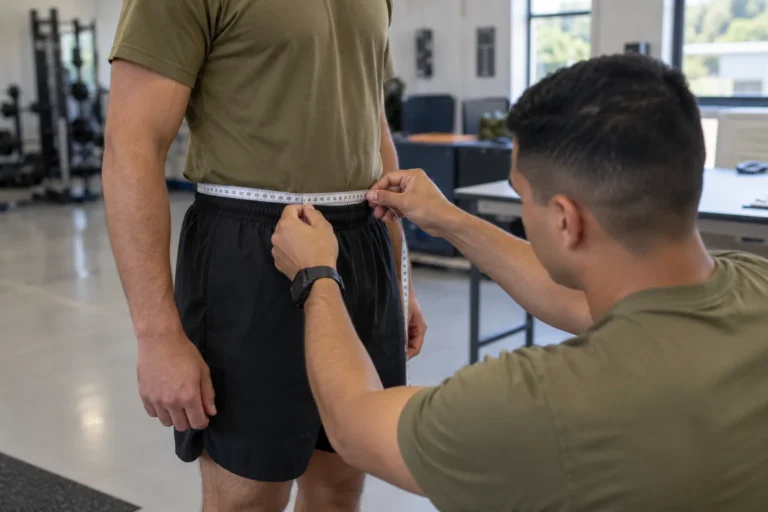
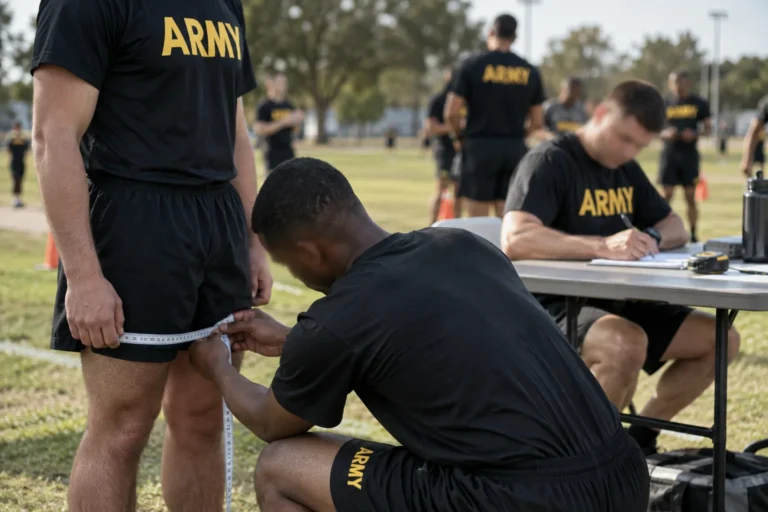
Army Directive 2026-13, effective 7 July 2026, rescinded the 465-point body fat exemption. Waist-to-height ratio under 0.550 is now the only body composition standard. Check your ratio with our body composition calculator.
Frequently Asked Questions
What to Do Next
To improve AFT score results with the least wasted effort, run a practice test this week. Put the raw numbers into the scoring tool and find the cheapest next point in each event. Train that event first, then retest in four weeks and re-rank.